




 Click it and Unblock the Notifications


Latest Updates
-
 Alia Bhatt And Vicky Kaushal Set The Ramp Ablaze In Manish Malhotra’s Stunning Chikankari Couture Looks
 -
 Bank Strike From September 28 To 30: Why Are Bank Employees Striking And Which Services Will Be Affected?
 -
 Kerala Faces Power Cut Crisis: What Happened And How People Are Coping With Night-Time Outages
 -
 Google Turns 28: 10 Surprising Things You Probably Never Knew About The Search Giant
 -
 World Tourism Day 2026: Significance, Theme And How India Is Redesigning Tourism With Artificial Intelligence
 -
 October 2026 Important Days And Events: Complete List Of National And International Observances
 -
 "I Look For Green Flags Now": Inside Dating's Biggest Shift In 2026
 -
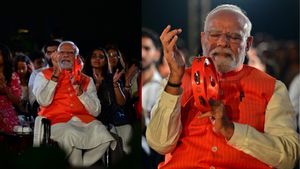 What Is Bhajan Clubbing? The Trend PM Modi Called Spectacular
 -
 Love & War First Looks: Alia Bhatt, Ranbir Kapoor and the Making of Bhansali's Next Epic
 -
 Bhadrapada Purnima 2026: What Makes This Full Moon Important Before Pitru Paksha


When the World Got Fooled: Iconic April Fool’s Pranks You Won’t Believe

April Fool's Day has always been about harmless fun, but some pranks didn't just fool a friend or two. They fooled entire countries.
Long before social media made misinformation a daily conversation, there were moments when people trusted what they saw and heard and got completely taken in.
Some of these pranks were so convincing, so well-timed, that even the most rational minds didn't question them until it was too late.
April Fool's Pranks That Fooled Millions

The Spaghetti Tree That Left People Curious (1957)
One of the most famous pranks came from the BBC, a name people trusted without hesitation.
In 1957, a news segment showed Swiss farmers harvesting spaghetti from trees. Yes-spaghetti trees.
The visuals looked real, the narration sounded serious, and viewers were intrigued. Many even called the network asking how they could grow their own spaghetti trees at home.
It sounds unbelievable now, but at the time, spaghetti wasn't a common household staple in many places, making the prank oddly believable.
The Day Sweden Told People to Fix Their TVs (1962)
Back when televisions were still evolving, a Swedish channel aired a "technical expert" explaining how viewers could turn their black-and-white TVs into colour.
The solution? Place a nylon stocking over the screen.
Thousands of people actually tried it.
It worked, of course, only in imagination, but it perfectly tapped into people's curiosity and hope for something new.
Google's Genius for Fooling the Internet

Fast forward to the digital age, and brands like Google turned April Fool's into an art form.
Over the years, they've introduced everything from:
- Gmail Paper (printing your emails and delivering them physically)
- Google Nose (searching smells online)
Pac-Man on Google Maps
These pranks were so detailed and well-executed that people often paused to wonder, "Wait, is this actually real?"
Flying Penguins That Took Over the Internet (2008)
Another BBC moment that went viral showed penguins flying.
The video looked cinematic, the storytelling was immersive, and the idea felt magical enough to believe, just for a second.
That's the thing about a great prank-it doesn't have to be logical. It just has to feel possible enough.
Why Do We Keep Falling for These?

Even when we know it's April Fool's Day, we still fall for things.
Because good pranks don't just rely on lies-they rely on timing, trust, and a bit of curiosity.
They play on what we already believe, what we want to believe, or what we don't question enough.
And sometimes, they simply catch us off guard in a moment when we're not expecting to be fooled.
From Broadcast to Instagram: The Prank Has Evolved
What started with newspapers and television has now moved to social media, where pranks spread faster and wider than ever.
The difference is that today, the line between real and fake is already blurred. So April Fool's doesn't feel like a disruption-it feels like an extension of everyday content.
Which is probably why we still hesitate before believing or disbelieving anything we see.
The Takeaway
These iconic pranks weren't just about tricking people; they revealed something deeper about us.
That we trust familiar sources and are curious by nature.
And that sometimes, we want to believe something just because it sounds interesting enough.
Because in the end, the best April Fool's jokes don't just fool us. They remind us how easily we can be convinced.

 Continue with Google

