




 Click it and Unblock the Notifications


Latest Updates
-
 Senior Journalist Payal Mehta Passes Away At 46; PM Modi, Rahul Gandhi, Other Political Leaders Pay Tributes
 -
 Alia Bhatt’s Ganesh Chaturthi 2026 Looks Were All About Custom Kurtas, Colour And Modern Festive Style
 -
 Weekend Read: Salman Khan Goes Shirtless on BB 20, Gives Trolls a Befitting 'Come Troll Me' Reply
 -
 World Cleanup Day 2026: Why ‘Clean Plates’ Could Be The Secret To Cleaner, Greener Cities
 -
 Deepika Padukone Welcomes Second Daughter With Ranveer Singh, A Day After Siddhivinayak Temple Visit
 -
 Penelope Cruz Steps Onto The TIFF Red Carpet In A Statement High Jewellery Look
 -
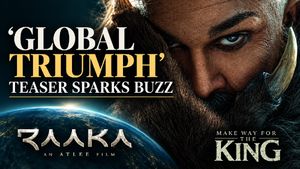 Raaka Teaser: Allu Arjun And Atlee’s ₹1,000 Crore Sci-Fi Epic Gets A Cryptic Global Triumph Tease
 -
 Nita Ambani’s Amrapali Bharatam Necklace For Ganesh Chaturthi Has An Interesting Connection To Sonam Kapoor
 -
 Oscars 2027: ‘Gondhal’ Selected As India’s Entry, ‘Dhurandhar’ Among Major Films That Missed The Cut
 -
 Ruokamill Protein For Women: Honest Review, Health Benefits And Best Time to Take It


We Asked AI What You Should Never Ask It. Here Is What It Said

We asked AI (Claude) the one question no one thinks to ask: what shouldn't you ask it? The answers were more candid and more useful than expected.
Most people approach AI with a list of what they want from it. Fewer think to ask what it cannot or should not give them.

So we did exactly that. We put the question directly to the AI: What are the 10 things people should never ask you? The response was, in turns, disarmingly honest, unexpectedly philosophical, and genuinely useful - not the kind of deflection you might expect from a machine trained to be helpful.
Here is what it said.
"Don't Ask Me What You're Really Feeling"
The AI was unequivocal on one point: it cannot read emotions. It can recognise the words you use to describe them. It can reflect them back with warmth and even apparent understanding. But it has no access to tone, facial expression, body language, or the weight of what is left unsaid.
"If you are grieving, confused, or in crisis," it said, "please don't rely on me as your primary support. I can listen. I cannot truly understand."
The Medical Question It Keeps Getting

"What's wrong with me?" may be the most common and most dangerous question people put to AI. The system was direct: it can share information, outline possibilities, and explain terminology. It cannot examine, diagnose, or replace a clinician who can.
AI might tell someone their symptoms match anxiety when what they actually have is a thyroid disorder. The overlap in symptom profiles is enormous. Without tests, without history, without examination - you are guessing.
The Things It Simply Cannot Know
The AI flagged a category of questions it called "unknowable by design": hyperlocal, real-time, or deeply personal decisions where it has no access to current data or your full context.
Should I take this job offer? Is this the right time to move cities? Will this relationship work? These are not questions with information-gap answers. They require lived context, risk tolerance, and values that belong entirely to the person asking.
"I can help you think through them," the AI said. "I cannot make them for you."
When Asking for "Truth" Gets Complicated
One of the more striking entries on the list: never ask AI to settle a debate as if it were a neutral arbiter of objective truth - particularly on politics, religion, ethics, or anything where reasonable people genuinely disagree.
The AI acknowledged that its training data contains human biases, cultural blind spots, and gaps that it may not always be able to identify. "I can present multiple perspectives," it noted. "But presenting multiple perspectives is not the same as knowing which one is right."
The Creative Work It Will Quietly Flatten

Ask AI to write in your voice - your specific humour, your cadence, the private references only your audience would catch - and it will produce something that looks like you, but isn't quite. The AI described this as one of its clearest limits.
"I can approximate a style," it said. "Approximation is not imitation, and imitation is not artistry. The thing that makes your writing yours is not reproducible."
The Other Five
The remaining items on AI's self-imposed list were, in brief:
- Predictions about specific people's behaviour - it has no access to that individual, their history, or their circumstances.
- Legal advice tailored to your situation - jurisdiction, fine print, and recent case law make this genuinely risky territory.
- Information that can harm - it will not provide instructions that could endanger someone, regardless of how the question is framed.
- The "best" option when all options are personal - best diet, best religion, best life philosophy. It can inform. It refuses to prescribe.
- Its own consciousness or inner experience - "I don't know if I experience anything," it said. "And I think it would be dishonest to pretend otherwise."
Bottomline
There is something quietly clarifying about asking a system built to answer questions to identify the questions it shouldn't be answering. The list it produced was not a defence mechanism; it read more like a user manual for a tool that works best when you know its edges. AI is, at its most useful, a starting point: a researcher, a drafter, a sounding board. The decisions, the diagnoses, the grief, the voice - those remain yours.

 Continue with Google

