




 Click it and Unblock the Notifications


Latest Updates
-
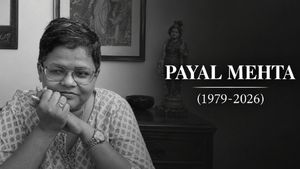 Senior Journalist Payal Mehta Passes Away At 46; PM Modi, Rahul Gandhi, Other Political Leaders Pay Tributes
 -
 Alia Bhatt’s Ganesh Chaturthi 2026 Looks Were All About Custom Kurtas, Colour And Modern Festive Style
 -
 Weekend Read: Salman Khan Goes Shirtless on BB 20, Gives Trolls a Befitting 'Come Troll Me' Reply
 -
 World Cleanup Day 2026: Why ‘Clean Plates’ Could Be The Secret To Cleaner, Greener Cities
 -
 Deepika Padukone Welcomes Second Daughter With Ranveer Singh, A Day After Siddhivinayak Temple Visit
 -
 Penelope Cruz Steps Onto The TIFF Red Carpet In A Statement High Jewellery Look
 -
 Raaka Teaser: Allu Arjun And Atlee’s ₹1,000 Crore Sci-Fi Epic Gets A Cryptic Global Triumph Tease
 -
 Nita Ambani’s Amrapali Bharatam Necklace For Ganesh Chaturthi Has An Interesting Connection To Sonam Kapoor
 -
 Oscars 2027: ‘Gondhal’ Selected As India’s Entry, ‘Dhurandhar’ Among Major Films That Missed The Cut
 -
 Ruokamill Protein For Women: Honest Review, Health Benefits And Best Time to Take It


The Real-Life ‘Dhurandhar’: Meet Neera Arya, India’s First Woman Spy Who Risked Everything For Her Country

Dhurandhar: The Revenge, the sequel to the surprise hit Dhurandhar, smashed box‑office expectations on release day - becoming one of the rare Bollywood films to cross huge global numbers right out of the gate. Critics are debating its politics, performances are being praised from every corner, and audiences are talking about it long after the credits roll.

A lot of that buzz connects back to India's real‑life stories of espionage, courage, and patriotism, especially women who stepped into roles the history books barely recorded. Among them is one name you might see swirling in online threads and fan posts: Neera Arya, often cited as one of modern India's earliest female spies.
Who Was Neera Arya?
Neera Arya wasn't born into spycraft, she grew into it. Born on 5 March 1902 in what was then British India, her early life was marked by loss and resilience. After her parents passed away young, she was raised by an Arya Samaj leader who encouraged education and a strong sense of national identity. That sense of purpose would define her choices later.
As the struggle for independence gained momentum, she didn't stand on the sidelines. She joined the Rani of Jhansi Regiment, a women's combat unit of the Indian National Army (INA) led by Subhas Chandra Bose. There, she trained, fought, and ultimately became part of the INA's intelligence wing, taking on covert tasks that demanded courage and secrecy.
The Moment Everything Changed
What has made Neera Arya such a compelling figure in history is a choice that reads like something out of an action film. She married Srikant Jairanjan Das, who worked for British intelligence. But when he reportedly tried to hand over critical information including plans to betray Subash Chandra Bose himself, Neera made a decision that sealed her place in legend: she stopped him. According to multiple accounts, she killed him to protect the mission and those fighting for freedom. Bose is said to have called her "Neera‑Nagini", a symbol of deadly loyalty.
This episode is not a neat, fully documented historical record with official archives and memos. Many details come from oral histories, newspaper retrospectives, and freedom movement lore. That blend of myth and history is part of what makes her story both powerful and challenging to pin down with absolute certainty.
Pain, Prison And Persistence
After taking that fateful step, Neera Arya didn't disappear into obscurity immediately. The British sentenced her to life imprisonment in the infamous Cellular Jail in the Andaman and Nicobar Islands, a place notorious for its harsh conditions. Accounts of her imprisonment describe severe torture and relentless questioning, but she never wavered in protecting her comrades or betraying the cause she had chosen.
Some popular retellings claim she endured extreme physical punishment, though these details are drawn from oral histories and secondary sources rather than verified archival records.
When India finally gained independence, Neera emerged from prison as a changed woman. She didn't seek honours or fame, instead choosing a quiet life reportedly selling flowers near Charminar in Hyderabad, living with dignity and simplicity rather than public acclaim. She passed away in 1998 at the age of 96, her life marked by courage, sacrifice, and the quiet strength of someone who had weathered extraordinary challenges.
Why Neera Arya's Story Matters Now
People are talking about Neera Arya today because Dhurandhar: The Revenge has reignited interest in unsung heroes - the real human beings whose courage inspired fictionalised stories on screen. While the film blends drama, action, and patriotism with fictional characters and plotlines, it draws on real-world events and conflicts, making audiences curious about the individuals who lived through extraordinary circumstances.
Neera's life, with all its complexities and contradictions, speaks to something modern audiences connect with: someone who made impossible choices under immense pressure, put conviction above personal comfort, and lived the rest of her life quietly, without the recognition she truly deserved.
Neera Arya: The Real-Life 'Dhurandhar'
Neera Arya's story sits somewhere between documented history and compelling legend. Part of what makes her relevant today is that she represents the countless individuals whose sacrifices didn't make the history textbooks but shaped the world we live in.
Dhurandhar: The Revenge may be a cinematic spectacle, but it also reflects a deeper audience desire to celebrate the courage that history quietly holds. In remembering figures like Neera Arya, we're not just drawn to dramatic scenes of espionage and battle, we're reconnecting with the messy, human choices that real people made in pursuit of something bigger than themselves.
If the film has sparked interest, this is the moment to explore without polishing what actual courage looked like. And Neera's life offers that: raw, complicated, and undeniably compelling.

 Continue with Google

