




 Click it and Unblock the Notifications


Latest Updates
-
 When Two Epilepsy Medicines Fail, What Should Families Do Next?
 -
 Delhi-NCR Under GRAP 1: The Curbs, the Bans and the Rules to Know
 -
 Sepsis Can Look Like ‘Just a Bad Infection’: Expert Lists Warning Signs Families Need to Know
 -
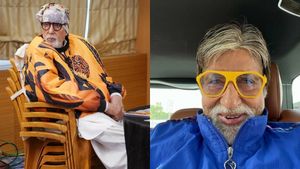 Amitabh Bachchan Social Media Break: Doctors Ask Big B To Rest
 -
 Throwback Thursday: Yash Chopra’s Heroines And The Fashion That Defined Bollywood Romance
 -
 Deepika Padukone Wears ₹90,000 Gold Kurta Set As Ranveer Singh, Daughter Dua Twin For Baby Devi’s Name Reveal
 -
 Women, Menopause And Bone Health: Doctor Explains Why Osteoporosis Risk Rises After 40
 -
 Can Breast Cancer Be Detected Before Symptoms Appear? A Doctor Explains The Role Of Screening
 -
 Papankusha Ekadashi 2026: October 21 Or 22? Know The Correct Date, Tithi And Significance
 -
 OTT Releases This Week (October 19–25): New Movies And Series On Netflix, Prime Video, JioHotstar And Zee5


Disability Rights (Or The Lack Thereof)


Having a 'disability" puts a person in the largest minority in the world. A minority that has been denied its rights for years on end, with no justification whatsoever. Oh, wait! A 2007 study by the World Bank shows that an overwhelming majority of Indians consider disabilities to be a result of Karma or a curse of God and, therefore, ostracise people with disabilities. I believe that if you consider that to be a good enough justification, you are committing bad Karma. Beware.
Then there is another set of enlightened people. The charity folk. The ones who 'give" persons with disabilities what they need. Well, some food, a place to stay, clothing – that"s about it they require, right? If someone came to you and said, “Look, you"re disabled according to a number of us and so we"ve decided to take you on as our pet project. We"ll give you food, drink, a room in some institution and clothes as per requirement. Be happy, alright?" would you be happy? Would you agree to spend your life according to what others believe you require?
When we talk of women"s rights, do we consider women with disabilities? When the government publishes something for its people, is it published for all Indian citizens? When we design a building, do we ensure that everyone can get in? Is our public transport system really public? Are all jobs open for all people with the requisite qualifications? Well. NO. We discount a sizable population. Every single time.
It"s time we did a rethink. What is a disability? If you knew nothing about mathematics and were shoved into a room full of mathematicians who refused to talk about anything but math, wouldn"t you be disabled in conversation? If you were forced to study in Braille, wouldn"t you be disabled? Are you the person creating the disability or is the circumstance such that you find yourself disabled? Is it you, or is it your surrounding? It"s not the fault of a person who has to use a wheelchair that he can"t enter a building, it"s the fault of those who built it such that a person using a wheelchair can"t enter.
Which brings one to a pertinent question: on what grounds can a person with disabilities be denied access? If every child has a right to education, then why don"t educational institutions allow universal access? If a person has made it through an interview then how can he be denied a job on the grounds that he requires matter to be printed in larger font size or requires a screen reader? On what grounds can you deny a people with disabilities the right to use a public toilet without aid? What right do you have to publish books in a manner that actively denies all those who"re unable to read normal printed books the chance to peruse them? It"s a simple answer. We haven"t the right to deny access.
I believe it"s time we realized that pity isn"t an answer. Nobody wants pity. Give the 70 million people in India their rights. Else, remember the bad Karma threat.

 Continue with Google

