



 Click it and Unblock the Notifications



Latest Updates
-
 Diwali 2026: Chakli To Nimki, 7 Regional Savoury Snacks That Bring Traditional Indian Flavours To Your Table
-
 Filmmaker Sanjay Gupta Passes Away At 57: ‘Aatish’ To ‘Kaabil’, Look At His Three-Decade Bollywood Journey
-
 Halloween 2026: From Chudail To Yakshi, 5 Mysterious Supernatural Beings That Haunt Indian Folklore
-
 Rashtriya Ekta Diwas 2026: Significance, History And Sardar Vallabhbhai Patel's Role In Uniting India
-
 Survey Finds 68% Of Previously Married Singles Hesitate To Match With Never-Married Partners
-
 Diwali 2026: Complete Five-Day Festival Calendar, Dates, Significance And Celebrations
-
 Weight, Alcohol, Hormones: Pathologist Shares Insights On What Really Shapes A Woman’s Breast Cancer Risk
-
 Diwali 2026: 5 Healthy Homemade Indian Sweets That Go Beyond Traditional Mithai
-
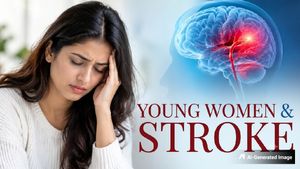 Stroke In Young Women: Neurologist Explains Warning Signs And Hormonal Risk Factors
-
 ‘Star Trek’ And ‘X-Men’ Actor Patrick Stewart Passes Away At 86 After Dementia Battle


Women Prefer Washing Machine Than Contraceptive Pill


Giving a description of the write-up, the paper revealed that it read: "In the 20th century, what contributed most to the emancipation of western women?" The paper added: "The debate is still open. Some say it was the pill, others the liberalisation of abortion, or being able to work outside the home. Others go even further: the washing machine."
The Vatican newspaper highlighted the fact that the first rudimentary washing machines appeared as far back as 1767, and the first electrical models being produced at the beginning of the 20th century. It further said that even though early models of the washing machine were expensive and unreliable, the technology had improved to the point that there is now 'the image of the super woman, smiling, made-up and radiant among the appliances of her house'.
Quite obviously, The article has not gone down well with some commentators and politicians. "Instead of entering into an abstract debate on gender, it would be better if L'Osservatore Romano discussed reality, such as the fear in which many women still live when they are in the streets and between the walls of their own homes," Paola Concia, an MP from the opposition Democratic Party, said.
AGENCIES

 Continue with Google


