




 Click it and Unblock the Notifications


Latest Updates
-
 Jayaparvati Vrat 2026: All About The Five-Day Fast Dedicated To Goddess Parvati
 -
 August 2026 Festival Calendar: Complete List Of Hindu Fasts, Vrats And Auspicious Dates
 -
 Is Your Necklace Right For Your Neckline? Here's The Styling Secret To The Perfect Look
 -
 National Parents Day 2026: Parents Are Ageing—8 Subtle Signs They May Need More Support Than They Admit
 -
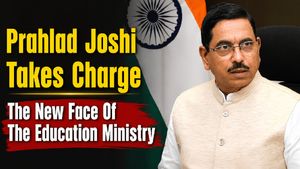 Who Is Prahlad Joshi? Meet The New Education Minister Replacing Dharmendra Pradhan
 -
 Ravi Pradosh Vrat 2026: Significance, Puja Muhurat, Rituals And Everything Devotees Need To Know
 -
 Kargil Vijay Diwas: 10 Untold Stories of Courage That Still Give Goosebumps
 -
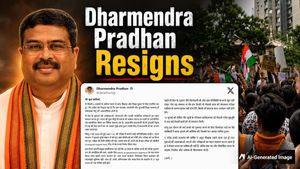 Dharmendra Pradhan Resigns Amid Student Protest: Everything To Know About India's Outgoing Education Minister
 -
 Shabana Azmi Tests Positive for Swine Flu (H1N1) After Joining Student Protests
 -
 Monthly Horoscope August 2026: Rinhee Suberwal's Predictions For All 12 Signs


Recording Of Gandhi's Speech Found In Washington


Millions of people who have heard Gandhi speak in English say, it was not his actual voice but the one that was channelled through the voice of actor Ben Kingsley in the famous 1982 movie by Richard Attenborough.
That's because there were only two occasions when the Indian leader was recorded speaking in English, according to his grandson and biographer Rajmohan Gandhi. One speech, about religious issues, was recorded in the 1930s.
For decades, the second speech was largely lost to the world. A few years ago, an Italian cellphone company made a commercial using excerpts, and its scattered fragments are available on the Internet, the Post says.
It is this second speech, which surfaced recently in Washington DC and was recorded in New Delhi by Alfred Wagg, a foreign correspondent. He produced four 78-rpm LPs that included both Gandhi's voice as well as Wagg's own commentary about the Indian independence leader.
The second speech has been "lovingly preserved for 60 years" by John Cosgrove, a former president of the National Press Club.
Cosgrove's copy came from Alfred Wagg, a journalist who worked in New Delhi as a foreign correspondent in the 40's. The speech touched on familiar themes, dear to the Mahatma, but was, unusually, in English. It is because Gandhi preferred to speak to Indian audiences in their own languages. He regularly used Hindi, although his native tongue was Gujarati.
This speech was made to a gathering of Asian leaders, for whom English was a common language.
The Post says Cosgrove discovered the significance of the recording during a chance encounter with Rajmohan Gandhi, when the author came to the Press Club this past spring to promote his new biography.

 Continue with Google