




 Click it and Unblock the Notifications


Latest Updates
-
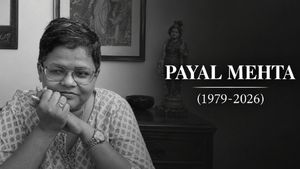 Senior Journalist Payal Mehta Passes Away At 46; PM Modi, Rahul Gandhi, Other Political Leaders Pay Tributes
 -
 Alia Bhatt’s Ganesh Chaturthi 2026 Looks Were All About Custom Kurtas, Colour And Modern Festive Style
 -
 Weekend Read: Salman Khan Goes Shirtless on BB 20, Gives Trolls a Befitting 'Come Troll Me' Reply
 -
 World Cleanup Day 2026: Why ‘Clean Plates’ Could Be The Secret To Cleaner, Greener Cities
 -
 Deepika Padukone Welcomes Second Daughter With Ranveer Singh, A Day After Siddhivinayak Temple Visit
 -
 Penelope Cruz Steps Onto The TIFF Red Carpet In A Statement High Jewellery Look
 -
 Raaka Teaser: Allu Arjun And Atlee’s ₹1,000 Crore Sci-Fi Epic Gets A Cryptic Global Triumph Tease
 -
 Nita Ambani’s Amrapali Bharatam Necklace For Ganesh Chaturthi Has An Interesting Connection To Sonam Kapoor
 -
 Oscars 2027: ‘Gondhal’ Selected As India’s Entry, ‘Dhurandhar’ Among Major Films That Missed The Cut
 -
 Ruokamill Protein For Women: Honest Review, Health Benefits And Best Time to Take It


Maharana Pratap Jayanti 2026: Significance, History And Legacy Of Mewar’s Warrior King

Every year, Maharana Pratap Jayanti brings the same question back into focus: why does a 16th-century ruler still hold so much space in public memory? On Maharana Pratap Jayanti 2026, the observance falls today on Wednesday, 17 June, based on the Hindu calendar's Jyeshtha Shukla Tritiya.
Unlike fixed-date commemorations, this one shifts each year because it follows the lunar cycle, not the Gregorian calendar. But the date is only the surface. The real story lies in why Maharana Pratap continues to be remembered, debated, and referenced even today.
What Maharana Pratap Jayanti Marks
Maharana Pratap Jayanti marks the birth anniversary of Maharana Pratap (1540-1597), the ruler of Mewar in present-day Rajasthan.

He is remembered primarily for four things:
- His resistance to Mughal emperor Akbar
- His leadership in the Battle of Haldighati (1576)
- His refusal to accept Mughal sovereignty
- His long struggle to keep Mewar independent
For many, this day is about revisiting a figure tied to ideas of independence and political resistance in medieval India.
How Maharana Pratap Jayanti Is Observed
The observance is especially visible in parts of Rajasthan, with participation also seen in Haryana and Himachal Pradesh.
Typical activities include:
- Cultural programmes in schools and community spaces
- Processions and public rallies
- Tributes at statues and memorials
- Discussions and events highlighting regional history
The tone of the day varies from formal remembrance to community-led celebrations, depending on the region.
Why Maharana Pratap Is Remembered
Maharana Pratap is remembered as one of the most significant Rajput figures in Indian history for his resistance to Mughal expansion under Emperor Akbar for the following reasons:
1) Refusal To Accept Mughal Authority
After Akbar expanded Mughal control across North India, many Rajput kingdoms entered alliances with the empire.
- Maharana Pratap refused to accept Mughal suzerainty.
- He did not enter the Mughal court or formally submit to Akbar.
- Mewar remained one of the few Rajput states that continued armed resistance.
This long-term refusal to submit is the central reason he is historically significant.
2) The Battle Of Haldighati (1576)
One of the most documented events of his life is the Battle of Haldighati.
- Fought on 18 June 1576.
- Between Maharana Pratap's forces and Mughal forces led by Man Singh I of Amber.
- The Mughal army had greater numbers and resources.
According to the historical consensus:
- The Mughal army held the battlefield.
- Maharana Pratap was forced to retreat into the hills.
- He was never captured or killed.
The battle is remembered for its intensity and symbolic importance rather than a decisive victory.
3) Continued Resistance After The Battle
After Haldighati, Maharana Pratap did not surrender.
- He withdrew into the forested and hilly regions of Mewar.
- He continued resistance through mobile and guerrilla-style warfare.
- He gradually rebuilt support in parts of his kingdom.
This phase of his life highlights his determination to continue the struggle despite reduced resources.
4) The Support Of Bhamashah
A key part of Maharana Pratap's survival efforts was the support of his minister, Bhamashah.
- Historical tradition credits Bhamashah with providing financial support.
- He also helped sustain the logistical needs of the resistance.
- This assistance helped Maharana Pratap rebuild his forces.
While details vary across sources, Bhamashah's contribution remains widely acknowledged.
5) Partial Restoration Of Mewar
Later in his life:
- Maharana Pratap regained influence over parts of Mewar.
- He continued to operate independently from Mughal authority.
- He never signed a formal treaty of submission with the Mughal Empire.
However, full restoration of all former Mewar territories did not occur during his lifetime.
Maharana Pratap's Cultural Memory and Legacy
Over time, Maharana Pratap's story moved beyond documented history into cultural memory.
He is remembered as:
- A symbol of resistance against imperial expansion
- A central figure in Rajasthan's regional identity
- A presence in folk songs, oral traditions, and local storytelling
Figures like his horse Chetak also became part of this wider cultural narrative, blending historical record with folklore. These stories helped shape how later generations understood his life and choices.
How Maharana Pratap's History Continues To Frame Him
Maharana Pratap's legacy is not defined by a single battle or a clear-cut victory. It comes from a consistent political position taken during a time when compromise was often the easier route.
Maharana Pratap Jayanti 2026 is, is all about revisiting the past as a finished story and more about understanding how history remembers resistance, persistence, and choices made under pressure.

 Continue with Google

