




 Click it and Unblock the Notifications


Latest Updates
-
 Kavya Maran Wedding In Greece? Date, Venue, and What Is Confirmed
 -
 Navratri Fasting 101: What To Eat, What To Skip, And How To Avoid Acidity And Headaches
 -
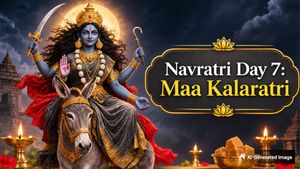 Navratri Day 7: Maa Kalaratri Puja, Colour, Rituals And Significance
 -
 Office To Dandiya Nights: One Quick-Change Outfit Formula For Navratri 2026
 -
 As ‘Ranabaali’ Hits Theatres, A Look At Rashmika Mandanna’s ₹1.31 Lakh Ivory Saree For Pre-Release Promotions
 -
 Durga Puja Pandals Mumbai 2026: 7 Stunning Celebrations To Explore From Matunga To Juhu
 -
 World Spine Day 2026: Is Your Phone Habit Causing Neck Pain? What To Know About Tech Neck
 -
 Breast Cancer Awareness Month 2026: Expert Explains Why Family History Isn't the Only Risk
 -
 Skanda Sashti 2026: Significance, Vrat Rituals And How Devotees Observe The Day
 -
 Saraswati Avahan 2026: Significance, Shubh Muhurat, Rituals And Puja Vidhi


Mahaparinirvan Diwas 2025: Significance, How It Is Celebrated, And The Concept Of ‘Mahaparinirvan’

This day on 6 December, 2025 people remember Dr B. R. Ambedkar. His ideas about dignity, equality, and rights aren't things locked away in history books; they show up in everyday conversations, arguments, and even the way we think about fairness and equality.

And with 2025 marking 70 years since his passing, the day carries a stronger pull. You see more discussions, more reflection, and a sense that the issues Ambedkar spoke about - equal opportunity, representation, social barriers, aren't relics of the past. They're still part of the present, which is exactly why the day resonates the way it does.
What "Mahaparinirvan" Actually Means
The word comes straight from Buddhist thought. Mahā-parinirvāṇa refers to the final liberation, the state reached after passing away by someone who has attained complete spiritual enlightenment.
When people use this term for Dr Ambedkar, it reflects the respect many have for how he lived: a life rooted in justice, equality, and social upliftment. It's a farewell not just to the man, but to a mind that changed the direction of an entire country.
Why Mahaparinirvan Diwas Matters: Ambedkar's Work And Influence
Mahaparinirvan Diwas isn't observed out of habit. It holds weight because Dr Ambedkar's work still shapes modern India in visible ways:
- He led the drafting of the Constitution, setting the foundation for liberty, equality, fraternity, and justice.
- He fought lifelong battles against caste discrimination, standing up for communities that were routinely excluded.
- He believed education was the strongest tool for empowerment, something he emphasised in his own journey.
- He pushed for social reform, not as an abstract dream but as an everyday responsibility.
The day becomes a checkpoint - a moment for people to ask whether society is living up to these principles or drifting away from them.
How Mahaparinirvan Diwas Is Observed Across India
The commemorations aren't identical everywhere, but the sentiment is. Here's what usually happens on 6 December:
- Chaitya Bhoomi in Mumbai turns into the focal point. Thousands visit, offer flowers, sit in silence, or simply stand for a few minutes to pay their respects.
- Memorial events, speeches, and discussions are organised in colleges, community spaces, and cultural centres. These often include readings from Ambedkar's writings and conversations about social equality.
- Leaders and public figures across political and social groups share tributes, recognising his contribution to India's democratic framework.
- In parts of Maharashtra, the day is marked as a public holiday. Some regions also declare a dry day out of respect.
- Groups and organisations use the day for reflection often focusing on equality, dignity, and the rights of marginalised communities.
In short, the day isn't celebrated in a festive way; it's observed with seriousness, respect, and a sense of responsibility.
Why Mahaparinirvan Diwas 2025 Stands Out
Reaching the 70-year mark gives the day more visibility and urgency. You'll see:
- More coverage across news platforms and social media
- Larger gatherings and tributes
- Extended discussions on Ambedkar's ideas
- Events aimed specifically at younger audiences who may know his name but haven't fully explored his work
- Several civil-society groups and educational institutions have already planned programmes throughout December, using the milestone to spark fresh conversations on discrimination, opportunity, and representation.
What Mahaparinirvan Diwas 2025 Means for Society Today
Mahaparinirvan Diwas isn't just about looking back. It asks people to think about the present:
- Are we living in a society that truly honours equality?
- Do people across communities have the dignity and opportunity the Constitution promises?
- Are we standing up when we see discrimination happening around us?
The day pushes people regardless of background to reflect on these questions. And for many, it highlights that fairness isn't a concept, it's a practice.
Seventy years after Dr Ambedkar's passing, the values he fought for still feel current. Mahaparinirvan Diwas 2025 isn't framed around rituals; it's about taking stock of where we are and how far we still need to go.
Whether you're someone who visits Chaitya Bhoomi, attends a talk, reads his work, or simply pauses for a moment - the day offers space to reflect on equality and justice in a practical, real-world sense. And that's exactly why the day continues to have meaning: it keeps the conversation alive.

 Continue with Google

