




 Click it and Unblock the Notifications


Latest Updates
-
 As ‘Ranabaali’ Hits Theatres, A Look At Rashmika Mandanna’s ₹1.31 Lakh Ivory Saree For Pre-Release Promotions
 -
 Durga Puja Pandals Mumbai 2026: 7 Stunning Celebrations To Explore From Matunga To Juhu
 -
 World Spine Day 2026: Is Your Phone Habit Causing Neck Pain? What To Know About Tech Neck
 -
 Breast Cancer Awareness Month 2026: Expert Explains Why Family History Isn't the Only Risk
 -
 Skanda Sashti 2026: Significance, Vrat Rituals And How Devotees Observe The Day
 -
 Saraswati Avahan 2026: Significance, Shubh Muhurat, Rituals And Puja Vidhi
 -
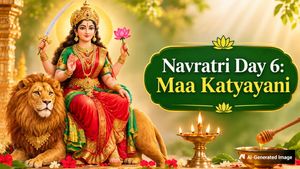 Navratri Day 6: Maa Katyayani Puja, Colour, Rituals, And Significance
 -
 Garba Before The DJ Era: What Navratri Looked Like In Earlier Times
 -
 What Does Indian Design Mean Today? A Creative Director Explains
 -
 Why Your Vision Can Feel Different In Bright And Dim Rooms, Expert Explains


Why Eradication Of Mosquitoes Is Not The Best Idea
Mosquitoes, who play a major role in various ecosystems, should not be simply wiped out -- instead their ability to transmit diseases should be suppressed, a team of scientists has said.

Mosquitoes, who play a major role in various ecosystems, should not be simply wiped out -- instead their ability to transmit diseases should be suppressed, a team of scientists has said.
Mosquitoes have co-evolved with many species, so there are likely other organisms that depend on them as a food source -- thus wiping out the species may have wider effects, the researchers said.


"To yank (mosquitoes) out abruptly, I don't know what that does as they are a large part of the biomass in many ecosystems," Catherine Hill, Professor at the Purdue University in US state of Indiana, said in a statement.
Thus, developing a non-lethal pesticide that will only affect the biology of the mosquito, while reducing its ability to transmit to another host, without killing the species or interfering with other life forms may hold the solution, Hill added.
Further, Hill pointed out that while mosquitoes are in their aquatic stage, they serve as a food source for fish and predatory insects. During this stage, mosquitoes also serve as filter feeders, which results in organic matter being turned over, making them excellent converters in an ecosystem.
In their terrestrial stage, mosquitoes serve as food for birds, bats, salamanders, lizards, frogs and other animals.

Moreover, according to Hill, there are several thousand species of mosquitoes worldwide, with only a small percentage of those species carrying diseases.
But, very little is known about the species that do not transmit disease, so this leaves a lot of unanswered questions concerning what would happen if mosquitoes were wiped out, Hill said.
With Inputs From IANS
Disclaimer: The information provided in this article is for general informational and educational purposes only and is not intended as a substitute for professional medical advice, diagnosis, or treatment. Always seek the advice of your physician or a qualified healthcare provider with any questions you may have regarding a medical condition.

 Continue with Google

