




 Click it and Unblock the Notifications


Latest Updates
-
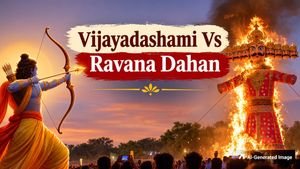 Dussehra 2026: The Difference Between Vijayadashami And Ravana Dahan
 -
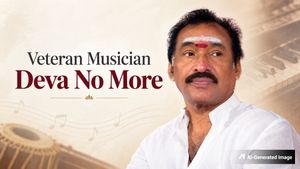 Veteran Musician Deva Dies At 75: Life And Legacy Of Thenisai Thendral
 -
 Navratri Fasting Diet: How To Stay Energised And Full Through The Day
 -
 Kavya Maran Wedding In Greece? Date, Venue, and What Is Confirmed
 -
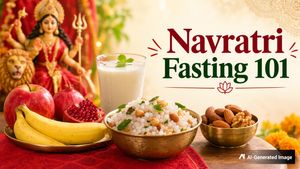 Navratri Fasting 101: What To Eat, What To Skip, And How To Avoid Acidity And Headaches
 -
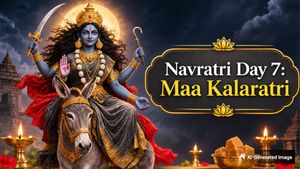 Navratri Day 7: Maa Kalaratri Puja, Colour, Rituals And Significance
 -
 Office To Dandiya Nights: One Quick-Change Outfit Formula For Navratri 2026
 -
 As ‘Ranabaali’ Hits Theatres, A Look At Rashmika Mandanna’s ₹1.31 Lakh Ivory Saree For Pre-Release Promotions
 -
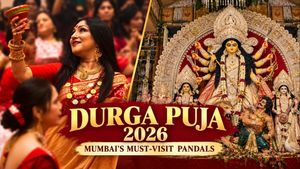 Durga Puja Pandals Mumbai 2026: 7 Stunning Celebrations To Explore From Matunga To Juhu
 -
 World Spine Day 2026: Is Your Phone Habit Causing Neck Pain? What To Know About Tech Neck


Who Is Lord Shiva? From Shiva Bhujanga Prayata Stotram By Adi Shankara

Who is Lord Shiva? We all know Him to be the Supreme Being and in accordance with Hindu tradition, the destroyer amongst the Hindu Trinity. But let's see what Adi Shankara has to say about who Lord Shiva is as in a sloka in his Shiva Bhujanga Prayata Stotram.
Who Lord Shiva Is In Hinduism
Shiva means 'the auspicious one'. Lord Shiva is both merciful and fearsome. He has the serpent king Vasuki around his neck, the Ganges in his matted locks, the crescent on his head and the third eye on his forehead. He has the trishul as his weapon and Nandi as his vehicle. He is worshipped with various names by his devotees. These are all the well known attributes of Lord Shiva. Let's explore what Adi Shankara has to say about Lord Shiva in his Shiva Bhujanga Prayata Stotram.

Who is Lord Shiva as stated in the Shiva Bhujanga Prayata Stotram
The Shiva Bhujanga Prayata Stotram is a beautiful composition by Adi Shankara to invoke the Grace of Lord Shiva. Apart from the popular attributes of Lord Shiva, Adi Shankara after the invocatory verse to Lord Ganesha, in Shiva Bhujanga Prayata Stotram, unveils the profound spiritual aspects of Lord Shiva. He praises the Lord as
Anaadyanthamaadhyam, param thathwamartham,
Chidaakaaramaekam, thureeyam thwamaeyam,
Haribrahma mrgyam, Parabrahma roopam,
Mano vaagatheetham maha shaivameedae.
Meaning : I meditate on that great light called Shiva, which has no beginning nor end, which is the real meaning of philosophy, which is the only one form of holy knowledge, which is thureeya, the blissful fourth state, which is the unknown, which was searched by Lord Brahma and Vishnu, and which is the form of ultimate truth.
Legend with relevance to the sloka as to who is Lord Shiva
There is a legend that is associated with Adi Shankara eulogising the greatness of Lord Shiva as the 'great light' which was 'searched by Lord Brahma and Lord Vishnu' in the Shiva Bhujanga Prayata Stotram. Once Lord Brahma and Lord Vishnu got into an argument about who is the greatest amongst the two.
They approached Lord Shiva to settle the dispute. Lord Shiva took the form of a huge column of fire that one can't fathom its height and depth. Lord Brahma took the form of a swan and tried to reach the end of the column of fire while Lord Vishnu took the form of a wild boar and tried to reach the top of the fire. Both couldn't succeed in their mission.
Lord Vishnu understood the greatness of Lord Shiva and accepted his defeat while Brahma took the aid of a Ketaki flower to lie that he had seen the top end of the pillar of fire. Shiva, outraged by Brahma's deceitful demeanour cursed that he shall not be worshipped and the Kektaki flower will not have a place in his worship.
Adi Shankara in his Shiva Bhujanga Prayata Stotram thus extols Lord Shiva as 'the great light' and that which was 'searched by Lord Brahma and Lord Vishnu.'
Let's thus seek the blessings of Lord Shiva by chanting the Shiva Bhujanga Prayata Stotram.

 Continue with Google

