




 Click it and Unblock the Notifications


Latest Updates
-
 Navratri 2026 Food Hopping In Delhi NCR: 7 Places To Explore For A Taste Of Festive Flavours
 -
 Why Casual Games Are Perfect for Quick Online Play
 -
 World Menopause Day 2026: Theme, Significance And What Research Reveals About Menopause In India
 -
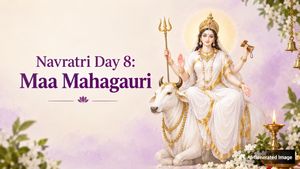 Navratri Day 8: Maa Mahagauri Puja, Colour, Rituals And Significance
 -
 Dussehra 2026: The Difference Between Vijayadashami And Ravana Dahan
 -
 Veteran Musician Deva Dies At 75: Life And Legacy Of Thenisai Thendral
 -
 Navratri Fasting Diet: How To Stay Energised And Full Through The Day
 -
 Kavya Maran Wedding In Greece? Date, Venue, and What Is Confirmed
 -
 Navratri Fasting 101: What To Eat, What To Skip, And How To Avoid Acidity And Headaches
 -
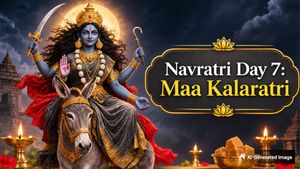 Navratri Day 7: Maa Kalaratri Puja, Colour, Rituals And Significance


The Nature Of Guru-Atman


Thus I feel that my Atman undergoes changes in different changed states of mind. Nonetheless that 'I' exists throughout in all states. If that 'I' is considered so changeable then who is it that experiences the changes? If the knower itself suffers so many changes it shall fail to remain steady in its true nature. Therefore there should be a knower who shall experience all the changes, a witness to the changes. It is verily the true Atman.
'Sakshi cheta kevalo nirgunashcha.' Like the piece of thread that passes through all the flowers in a garland, the Atman remains inherent through all the changes. Mayi sarvamidam protam sutre manigana iva 'in Me all this is strung like gems in a string' (Gita, 7.7). Atman is vyapaka. Vyapaka means He remains pervaded in selfsame form in us throughout all changes. He is beyond the comprehension of the ordinary people. Only the Jnanis (Illumined souls) can realize Him. 'The deluded do not see Him departing (from this body) or residing (in it) or experiencing (objects), being associated with the senses; but they who have the eye of knowledge see Him (Gita 15.10).' If we analyze this Atman de-recognising the changeable variables being not tts true nature, but is a witness to the changes, then the Atman is indeed birthless and deathless. 'Yatanto yoginashchainam pashyantyatmanyavasthitam—The Yogis striving (for perfection) behold Him dwelling in themselves (Gita 15.11).'
Atman associated with body is subject to birth and death. Thus what we mean by Prarabdha bhoga (Enjoying or suffering the accrued fruits of Karma) has no physical relationship with the body of the previous incarnation. Thus the present body does not even have the memories of Diksha (spiritual initiation) nor the physical impressions of the previous birth. Then how does the relationship with the Guru sustain? We should therefore understand here that Guru is not an embodied individual. It is because every embodied individual is subject to birth and death.
In our scriptures Guru is said to be eternal. Nityam shuddham nirabhasam nirakaram niranjanam (Gurugita, 50). With this understanding Guru can be said to be Nityam (Eternal) and his relationship with the Jivatma (Individual being) is never alienated. Nityaguru is omnipresent in the same sense as God is omnipresent. Thus this Nityaguru is one with God.
Scriptures ordain to pay obeisance to Guru: Gururbrahma Gururvishnuh Gururdevo Maheshvarah, Gurureva param Brahma tasmai Sri Gurave namah. (Gurugita, 26) It is further said: Mannathah Sri Jagannatho madguruh Srijagatguruh, Mamatma sarvabhutatma tasmai Sri Gurave namah (Gurugita, 37) Guru is Brahma, Vishnu, Maheshvara; indeed he is Param-brahma. This Guru is my Guru as much as he is Guru of everybody else, because he is not many—he is One. Failing to comprehend this we take the embodied individual as Guru. No eternal relationship is possible with an embodied individual. So scriptures do not call an embodied individual as Guru, whereas our relationship with the Nityaguru is never severed. Thus the question comes how should we view our Guru?
To Be Continued
About the author
Swami Bhuteshananda
Revered Maharaj was the twelfth President of the Ramakrishna Math and Ramakrishna Mission. The translation of the Bengali article that was published in the 6th Issue of 98th year of Udbodhan—Asada 1403 BS, on the occasion of Guru Purnima. Translator is Sri Dharitri Kumar Das Gupta.
Chat With The Devotees Of Ramakrishna Paramahamsa

 Continue with Google

