




 Click it and Unblock the Notifications


Latest Updates
-
 Navratri Fasting Diet: How To Stay Energised And Full Through The Day
 -
 Kavya Maran Wedding In Greece? Date, Venue, and What Is Confirmed
 -
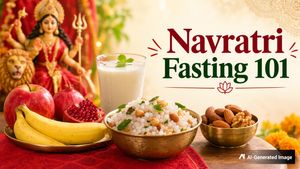 Navratri Fasting 101: What To Eat, What To Skip, And How To Avoid Acidity And Headaches
 -
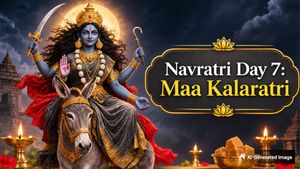 Navratri Day 7: Maa Kalaratri Puja, Colour, Rituals And Significance
 -
 Office To Dandiya Nights: One Quick-Change Outfit Formula For Navratri 2026
 -
 As ‘Ranabaali’ Hits Theatres, A Look At Rashmika Mandanna’s ₹1.31 Lakh Ivory Saree For Pre-Release Promotions
 -
 Durga Puja Pandals Mumbai 2026: 7 Stunning Celebrations To Explore From Matunga To Juhu
 -
 World Spine Day 2026: Is Your Phone Habit Causing Neck Pain? What To Know About Tech Neck
 -
 Breast Cancer Awareness Month 2026: Expert Explains Why Family History Isn't the Only Risk
 -
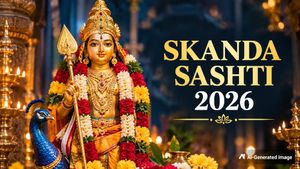 Skanda Sashti 2026: Significance, Vrat Rituals And How Devotees Observe The Day


Fear of Death (Reality Of Death & Usual Responses)


In 1969, Elisabeth Kubler-Ross shattered the silence with 'On Death and Dying'. In it she described the progression of a patient's coping mechanisms in five stages of dying: denial, anger, bargaining, depression and finally acceptance.
Dr. Byock, the author of 'Dying Well', offers what he calls the 'developmental model' of dying. When he began caring for the terminally ill 20 years ago, he noticed that when he asked patients how they were feeling, often the reply was something like this: 'Despite it all doctor, I am well.' This juxtaposition of wellness and dying seemed a paradox, but he has concluded that the two can exist side by side. 'In dying,' he said, 'there are opportunities to grow even through times of severe difficulties, which we would label suffering.'
Conventional wisdom holds that people die as they have lived; a crotchety old man in life will be a crotchety old man in death. Not so, say experts in end-of-life care; death can be both transforming and liberating. Dr. Halifax, the Buddhist priest, tells of a woman whose daughter was a hospice nurse. Throughout her life, the mother had adhered to strict codes of politeness and propriety. A few days before her death, she began screaming in rage and pain. As a nurse, her daughter knew that narcotics could subdue her mother's pain. But she chose to do nothing; the screaming, she believed, was her mother's way of finally expressing herself. 'The screaming went on for four days and four nights,' Dr. Halifax said. 'And about an hour before she died, she lit up, and became extremely peaceful, and relaxed completely. And then she died.'
Was it a good death? Dr. Halifax paused.
'A good death,' she finally allowed, 'sounds a little polite. It's like death with manners. I don't want to adorn death. Death is death.'
Usual Responses to the Fear of Death
Responses to the fear of death have been various. The response that is most common is, 'Don't think of death'. In the Mahabharata, King Yudhishthira was asked by a mysterious being, 'What is the greatest wonder in the world?' The king replied, 'Every day men see creatures depart to Yama's abode [i.e., they die] and yet those who remain seek to live for ever. This verily is the greatest wonder.'
The second response is, 'Accept the inevitable, because death is the universal destiny and there is nothing we can do about it.' The third response is, 'Enjoy life while you are alive, because this is the only life that we have.' The fourth response comes from the followers of faith. They say, 'Death is the law of earthly life, which is inherently sinful and corrupt. Bear with death as part of purification and education, and hope for eternal life hereafter.' The fifth response is, 'Fight death with material means.' There are many who believe that the developments of science and medicine will one day reverse the process of aging and eventually eradicate death altogether. But, as we develop smart technology and medicine, death also gets smarter and stronger.
About the author
Swami Adiswarananda
Swami Adiswarananda, the Minister-in-charge of the Ramakrishna-Vivekananda Centre, New York, USA, is a senior monk of the Ramakrishna Order. He is a well-known thinker and contributes articles to various journals.
Chat With The Devotees Of Ramakrishna Paramahamsa

 Continue with Google

