




 Click it and Unblock the Notifications


Latest Updates
-
 Deepika Padukone And Ranveer Singh Announce Second Daughter’s Name On Dussehra, Share Family Photo
 -
 Who Was Karthik Sabesh? Tamil Actor Passes Away At 37, Days After Uncle And Composer Deva’s Death
 -
 Who Is Ravleen Varghese? Meet The First Malayali Model To Walk The Victoria’s Secret Runway
 -
 World Osteoporosis Day 2026: A Minor Fall, A Major Fracture — Doctor On Why Older Adults Should Be Careful
 -
 Durga Visarjan 2026: October 20 or 21? Know Shubh Muhurat, Rituals And Significance
 -
 Happy Dussehra 2026: 50+ Wishes, Messages And Greetings To Share With Family And Friends
 -
 Dussehra 2026: Astrologer Ashutosh Clairvoyant On Colours, Offerings And Puja Rituals For Each Zodiac Sign
 -
 Hustle Culture Has a Bedroom Problem No One Talks About, Expert Explains
 -
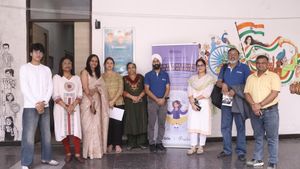 Iris Young Minds Initiative: How A Noida CSR Programme Is Opening Up Talk On Student Stress
 -
 Lal Hit Janta Party Explained: Who Is Behind The Rival to the Cockroach Janta Party


Shri Sai Sat Charitra-Chapter 31-Part III

Tatyasaheb Noolkar
Hemadpant gives no particulars regarding Tatyasaheb Noolkar, except the bare mention of the fact that he gave up his ghost in Shirdi. A brief summary of his account that appeared in the Sai Leela magazine is given here.
Tatyasaheb was a Sub-Judge at Pandharpur in 1909, when Nanasaheb Chandorkar was Mamalatdar there. Both met often and exchanged talks. Tatyasaheb did not believe in saints, while Nanasaheb loved them. Nanasaheb often told him the Leelas of Sai Baba and pressed him to go to Shirdi and see Baba. He finally agreed to go to Shirdi on two conditions:- (1) he must get a Brahmin cook, and (2) must get good Nagpur oranges for the presentation. Both these conditions were providentially fulfilled. A Brahmin came to Nanasaheb for service and he was sent to Tatyasaheb and a fruit parcel containing 100 beautiful oranges was received by Tatyasaheb, the consigner being not known.
Sai Ram. It was Sai, Who arranged that parcel and who thus pulled His devotee (though the devotee did not know that he was a devotee at that time) to Him.
As the conditions were fulfilled, Tatyasaheb had to go to Shirdi. At first Baba was much enraged with him.
Sai Ram. Baba was enraged with the atheist and non-believer in Tatyasaheb, not with Tatyasaheb himself.
But by and by Tatyasaheb got such experiences that he was convinced that Baba was God incarnate. So he was enamoured by Baba and stayed there till his death. As his end was approaching, sacred literature was read out to him and at the last hour Baba's Pada-tirth was brought and given to him for drinking. Baba on hearing of his death, said, "Oh, Tatya went ahead of us, he won't be reborn."
Sai Ram. What a great way to go? Tatya was indeed fortunate. Sai Ram.
Megha
The story of Megha has been already described in Chapter 28. When Megha died, all the villagers followed the funeral procession. Baba also accompanied them and showered flowers on Megha's body. After the obsequies were performed, tears flowed from Baba's eyes and like an ordinary mortal, Baba showed Himself overcome with grief and sorrow. Then covering the body with flowers and crying like a near relation, Baba returned to the Masjid.
Sai Ram. Megha was not learned in the ordinary sense but was indeed a great devotee. Sai also loved His devotees, as they loved Him. Sai Ram.
Many Saints have been seen giving Sadgati to men, but Baba's greatness is unique. Even a cruel animal like a tiger came to Baba's feet for being saved. It is this story which will be narrated now.

 Continue with Google

