




 Click it and Unblock the Notifications


Latest Updates
-
 Exosomes vs PDRN: What Should Patients Know Before Choosing a Regenerative Skin Treatment?
 -
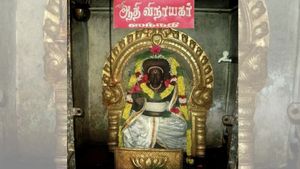 Adhi Vinayaka Temple: Tamil Nadu's Only Ganesha Shrine That Worships Him In Human Form
 -
 “I Want Skin Like Her”: How Social Media Is Shaping Unrealistic Skin Expectations Among Children
 -
 How Celebrity Culture Is Influencing Travel, Luxury and Everyday Lifestyle Choices
 -
 Emmy Winners 2026: Where to Watch the Award-Winning Shows in India
 -
 Matthew Rhys Makes Emmy History: The Story Behind His 2026 Wins
 -
 Rishi Panchami 2026: Significance Of Saptarishi Puja, Meaning Behind The Vrat And Rituals Explained
 -
 Samvatsari Parva 2026: Date, Significance And The Jain Tradition Of Seeking Forgiveness
 -
 ‘Jai Jai Ram’ Song From Ramayana Is Out! The Spiritual Meaning Behind The Film’s New Devotional Track
 -
 Moti Dungri Ganesh Temple’s Unique Ganesh Chaturthi Ritual: 3,500 Kg Mehendi Prasad for Marriage Blessings


Jyeshtha Adhika Amavasya 2026: Date, Muhurat, and Why This One Is Rare

For most of the year, an Amavasya comes and goes once a month, marking the day the moon disappears from the sky. But the Amavasya falling in mid-June 2026 carries a little more weight than usual. It lands during Adhik Maas - the "extra" lunar month the Hindu calendar occasionally inserts to stay in sync with the solar year - and on a Monday, which gives it the added name of Somvati Amavasya.

This rare overlap of Jyeshtha Adhika Amavasya and Somvati Amavasya is said to happen roughly once every three years, according to religious tradition, which holds that this rare spiritual combination occurs approximately once every three years, multiplying the merits gained from holy bathing, charity, chanting, penance, and service performed on this day. Here's everything to know about the date, timing and what devotees typically do on the day.
The Date And Muhurat To Note Down
According to Drik Panchang, the Amavasya tithi begins at 12:19 PM on June 14 and ends at 8:23 AM on June 15, 2026. Because Hindu festivals follow Udaya Tithi - the lunar day prevailing at sunrise - the principal observance falls on Monday, June 15, making it Jyeshtha Adhik Maas Amavasya as well as Somvati Amavasya.
For rituals such as bathing and tarpan, the early hours before sunrise - the Brahma Muhurat - are considered the most favourable window, with devotees encouraged to take a bath before sunrise, especially during the Brahma Muhurat, as this is considered particularly auspicious.
Why Falling In Adhik Maas Changes Things

Adhik Maas, also called Purushottam Maas, is the extra month added roughly every three years to balance the roughly 11-day gap between the lunar year of about 354 days and the solar year of about 365 days. The entire month is dedicated to Lord Vishnu, and tradition holds that worship performed during this period carries amplified results. Both Vedic astrologers and devotees believe that worshipping Lord Vishnu during Jyeshtha Adhik Maas Amavasya can bring auspicious results, with sincere prayer, chanting and rituals said to remove sins and karmic debts accumulated from past actions.
There's also an astronomical layer to this particular date. The same day marks Mithuna Sankranti, when the Sun transitions from Taurus into Gemini, a celestial shift considered to hold profound spiritual significance, alongside the formation of Sarvartha Siddhi Yoga and Amrita Siddhi Yoga.
What People Typically Do On This Day
Like most Amavasya days, this one is closely tied to ancestor worship. The day is considered especially auspicious for holy bathing, Pitru Tarpan, charity, and worship of Lord Vishnu, and performing Pind Daan is believed to bring peace to departed souls.
Common practices on the day include:
- Waking before sunrise for a ritual bath, ideally in a river or other water body
- Offering water and sesame seeds (tarpan) to ancestors, typically facing south
- Donating food, clothes or money to those in need
- Reading the Bhagavad Gita or chanting Vishnu mantras, particularly during Adhik Maas
- Avoiding the start of new ventures, as Amavasya is traditionally seen as inauspicious for fresh beginnings
- It's also generally recommended to read scriptures, perform charity, and chant during this period as part of honouring Lord Vamana, one of the divine forms of Vishnu associated with the month.
Bottomline
Amavasya itself isn't unusual - it happens every month. What makes this particular date worth marking on the calendar is the convergence: the close of Adhik Maas, a Monday that turns it into Somvati Amavasya, and a solar transition layered on top. Whether or not the astrology resonates with you, it's a useful reminder that the Hindu calendar is built on cycles within cycles - and once in a while, several of them line up at once.

 Continue with Google

