




 Click it and Unblock the Notifications


Latest Updates
-
 Kavya Maran Wedding In Greece? Date, Venue, and What Is Confirmed
 -
 Navratri Fasting 101: What To Eat, What To Skip, And How To Avoid Acidity And Headaches
 -
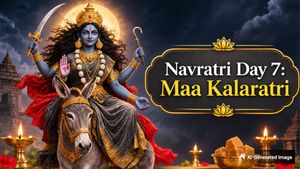 Navratri Day 7: Maa Kalaratri Puja, Colour, Rituals And Significance
 -
 Office To Dandiya Nights: One Quick-Change Outfit Formula For Navratri 2026
 -
 As ‘Ranabaali’ Hits Theatres, A Look At Rashmika Mandanna’s ₹1.31 Lakh Ivory Saree For Pre-Release Promotions
 -
 Durga Puja Pandals Mumbai 2026: 7 Stunning Celebrations To Explore From Matunga To Juhu
 -
 World Spine Day 2026: Is Your Phone Habit Causing Neck Pain? What To Know About Tech Neck
 -
 Breast Cancer Awareness Month 2026: Expert Explains Why Family History Isn't the Only Risk
 -
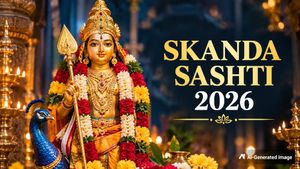 Skanda Sashti 2026: Significance, Vrat Rituals And How Devotees Observe The Day
 -
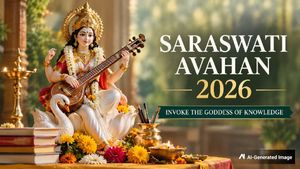 Saraswati Avahan 2026: Significance, Shubh Muhurat, Rituals And Puja Vidhi


Ganesha In Simple Forms-Worship On Ganesha Chaturthi


No elaborate worship is required to appease Lord Ganesha. A form can be attributed to Him in an instant by a devotee at the moment of devotion. One need not have to even fall back on His idol or His picture if he/she is in short of it.
In the early days, Lord Ganesha was worshipped on Ganesh Chaturthi with simple substances like cow dung, turmeric and clay which are considered to be very auspicious.
Ganesha in Turmeric
Lord Ganesha can be given a form in a simple thing as turmeric. Lord Ganesha can be invoked in a small conical form made out of blending water and turmeric to a thick consistency. When an elaborate Hindu worship is carried out, it usually commences with the worship of Lord Ganesha in this form. The form is later dissolved in a water body, such as a well or a lake.
Ganesha in Cow dung
An ancient way of Ganesha worship which is still followed to this day in Indian villages is modelling Him in cow dung. The Lord is invoked in a conical form of cow dung gripped and formed with the hand. This form of worship is considered to be the most auspicious.
Ganesha in clay
In the olden days Lord Ganesha was also formed with unbaked clay apart from having worshipped in forms made out of turmeric and cow dung.
Ganesha under a tree
Another important aspect of our most simple Lord Ganesha is His easy accessibility in even street shrines. He sits in bliss, easily accessible for even a by-passer who may not have the inclination to visit a temple. He is a gentle, yet a powerful reminder of the omnipresent nature of the all pervading Lord.
Further more all that is required to appease Lord Ganesha are humble offerings like modhak, puffed rice etc and a simple blade of grass.
Symbolic Significance
Worshipping the Lord in the aforesaid three forms is to denote the fact that the Lord is easily accessible to a devote heart. This is also symbolic of the presence of Lord in all forms of nature. At the culmination of worship the aforesaid three forms are returned to their original forms or rather to formless ( by dissolving in a water body (turmeric) or returning to the soil (Clay), disposing (cow dung) with dignity to the soil for growing plants) It reminds one of the fact that the Lord is the form of the manifest world, and when the forms are returned to their original forms, He assumes His true nature of formlessness. Hence He is the formless essence of all forms.
Scientific Outlook
Turmeric, Cow dung and clay are all biodegradable if it can be spoken of in the modern sense. Further more turmeric and cow dung are efficient disinfectants. That is why to this day, the floors in Indian villages are swabbed with cow dung and water and turmeric is a compulsory ingredient in Indian cuisine. Such aspects in Hinduism has no doubt made it immortal, standing the test of time.
So let us celebrate Ganesh Chaturthi with devotion to our Lord who is ever ready for a devout heart even in simple forms.

 Continue with Google


