




 Click it and Unblock the Notifications


Latest Updates
-
 Dussehra 2026: The Difference Between Vijayadashami And Ravana Dahan
 -
 Veteran Musician Deva Dies At 75: Life And Legacy Of Thenisai Thendral
 -
 Navratri Fasting Diet: How To Stay Energised And Full Through The Day
 -
 Kavya Maran Wedding In Greece? Date, Venue, and What Is Confirmed
 -
 Navratri Fasting 101: What To Eat, What To Skip, And How To Avoid Acidity And Headaches
 -
 Navratri Day 7: Maa Kalaratri Puja, Colour, Rituals And Significance
 -
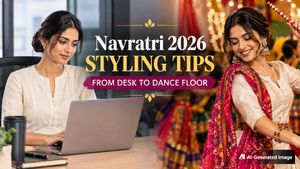 Office To Dandiya Nights: One Quick-Change Outfit Formula For Navratri 2026
 -
 As ‘Ranabaali’ Hits Theatres, A Look At Rashmika Mandanna’s ₹1.31 Lakh Ivory Saree For Pre-Release Promotions
 -
 Durga Puja Pandals Mumbai 2026: 7 Stunning Celebrations To Explore From Matunga To Juhu
 -
 World Spine Day 2026: Is Your Phone Habit Causing Neck Pain? What To Know About Tech Neck


Union Budget 2026 Makes Power Move For Women Entrepreneurs With ‘SHE Marts’ Scheme And ‘She-Mark’ Badge

For years, women-focused schemes in the Union Budget were largely about access-access to credit, access to self-help groups, access to livelihoods. In Budget 2026-27, Finance Minister Nirmala Sitharaman signalled a clear shift. The conversation has moved from earning to owning.

Two announcements stand out: the extension of the Lakhpati Didi scheme and the introduction of a new 'She-Mark' badge for women entrepreneurs. Together, they aim to help women build and grow real businesses, not just add to household income.
From Livelihoods To Ownership: What's Changing With Lakhpati Didi
The Lakhpati Didi scheme was originally designed to help women linked to self-help groups earn at least ₹1 lakh a year through sustainable livelihood activities. It worked-especially in rural India by combining skill training, credit access and collective support.
In Budget 2026-27, the government has extended the scheme with a sharper focus. The emphasis now is on helping women move beyond income-linked activities and step into enterprise ownership. This means encouraging women to run businesses that can grow, hire, and access markets independently, rather than remaining limited to small, home-based income models.
The extension recognises a simple truth: income stability is important, but long-term economic power comes from ownership and scale.
The 'She-Mark' Badge
One of the more interesting announcements this year is the introduction of the 'She-Mark' badge. At its core, this is a recognition framework for women-owned enterprises.
The idea is straightforward but significant. Women entrepreneurs often struggle to access formal credit, financial products and growth-linked instruments even when their businesses are viable. The 'She-Mark' badge is meant to act as a facilitator, helping women-led enterprises access specialised, credit-linked financial products and innovative funding options.
In practice, this could make it easier for lenders and institutions to identify, support and design products specifically for women entrepreneurs, reducing friction that has historically kept many businesses informal or underfunded.
SHE Marts And Market Access
Alongside She-Mark, the Budget also announced community-owned retail outlets known as SHE Marts. These are planned as collective platforms run by self-help entrepreneurs, particularly in rural and semi-urban clusters.
The goal here is market access. Many women-run enterprises can produce well but struggle to sell consistently beyond local markets. SHE Marts aim to bridge that gap by creating shared retail spaces backed by federations and supported through innovative financial instruments.
This approach leans into collective strength-allowing women entrepreneurs to participate in larger value chains without being forced to scale alone.
Why This Budget Feels Different For Women Entrepreneurs
What sets Budget 2026-27 apart is not just the number of women-focused announcements, but their direction. The government is clearly trying to move women out of the margins of the economy and into its formal, growth-oriented core.
Instead of treating women as beneficiaries of welfare or micro-credit alone, these measures acknowledge them as business owners who need branding, finance, market access and institutional recognition. It's a shift from survival economics to growth economics and that distinction matters.
The Road Ahead
Of course, announcements are only the starting point. The real test will lie in implementation-how She-Mark is defined, how accessible the financial products are, and whether SHE Marts can genuinely connect women-led enterprises to larger markets.
Still, Budget 2026-27 sends a clear message: women's economic participation is no longer being framed as support work. It's being treated as serious business.
And for millions of women already running enterprises often without visibility or backing, that recognition alone could be the most powerful signal yet.

 Continue with Google

