




 Click it and Unblock the Notifications


Latest Updates
-
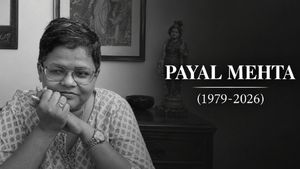 Senior Journalist Payal Mehta Passes Away At 46; PM Modi, Rahul Gandhi, Other Political Leaders Pay Tributes
 -
 Alia Bhatt’s Ganesh Chaturthi 2026 Looks Were All About Custom Kurtas, Colour And Modern Festive Style
 -
 Weekend Read: Salman Khan Goes Shirtless on BB 20, Gives Trolls a Befitting 'Come Troll Me' Reply
 -
 World Cleanup Day 2026: Why ‘Clean Plates’ Could Be The Secret To Cleaner, Greener Cities
 -
 Deepika Padukone Welcomes Second Daughter With Ranveer Singh, A Day After Siddhivinayak Temple Visit
 -
 Penelope Cruz Steps Onto The TIFF Red Carpet In A Statement High Jewellery Look
 -
 Raaka Teaser: Allu Arjun And Atlee’s ₹1,000 Crore Sci-Fi Epic Gets A Cryptic Global Triumph Tease
 -
 Nita Ambani’s Amrapali Bharatam Necklace For Ganesh Chaturthi Has An Interesting Connection To Sonam Kapoor
 -
 Oscars 2027: ‘Gondhal’ Selected As India’s Entry, ‘Dhurandhar’ Among Major Films That Missed The Cut
 -
 Ruokamill Protein For Women: Honest Review, Health Benefits And Best Time to Take It


Harish Rana, India’s First Passive Euthanasia Patient Passes Away: How India Implements The Procedure

Harish Rana, a 32-year-old man from Ghaziabad, had spent 13 years in a persistent vegetative state after a severe brain injury in 2013. Despite years of medical care, he never regained consciousness.

On Tuesday, 24 March 2026, Harish passed away at AIIMS Delhi through court-approved passive euthanasia, marking a historic moment in India's legal and medical history and raising important questions about life, dignity, and end-of-life decisions.
Who Was Harish Rana?
Harish Rana's story is both personal and historic. For over a decade, he remained unconscious, unable to interact or regain meaningful awareness. His medical condition was deemed irreversible, leaving his family and doctors in a difficult position, balancing care with the recognition that recovery was virtually impossible.
Did Harish Rana Pass Away?
Yes. On Tuesday, 24 March 2026, Harish Rana passed away at AIIMS Delhi following passive euthanasia - a carefully supervised withdrawal of life-sustaining treatment. This event was groundbreaking in India because it was the first implementation of a court-approved passive euthanasia order, marking a significant milestone in the nation's medical and legal history.
Why Was Harish Rana's Case Significant?
Harish's case reached the Supreme Court of India, which approved the withdrawal of life-sustaining treatment under the constitutional framework, referencing the right to die with dignity. This decision drew on earlier rulings, notably Common Cause v. Union of India (2018), which formally recognized passive euthanasia as legally permissible under specific conditions.
The case wasn't just about Harish; it set a precedent for how India approaches end-of-life care, legal oversight, and the ethical responsibilities of families and medical teams.
Understanding Euthanasia
Euthanasia is often misunderstood. At its core, it refers to intentionally ending a life to relieve suffering. But there's a key distinction:
Active Euthanasia
Involves directly causing death, for example, through a lethal injection. This is illegal in India and considered a criminal offence.
Passive Euthanasia
Involves withholding or withdrawing life-sustaining treatment, such as ventilators, feeding tubes, or dialysis. Death occurs naturally from the underlying condition rather than being directly caused.
Legally recognized in India since 2018, passive euthanasia was applied in Harish's case in 2026.
How Is Passive Euthanasia Carried Out?
The process in India is methodical and carefully supervised:
Medical Assessment
The patient must be in an irreversible condition with no realistic chance of recovery.
Legal Permission
Courts may be approached to authorize withdrawal, particularly if there is no Advance Medical Directive or living will.
Medical Team and Palliative Care
Once approved, the patient is shifted to a palliative care unit, where a trained team monitors the process.
Withdrawal of Life-Sustaining Treatment
Treatments such as feeding tubes or ventilators are gradually reduced or removed.
The focus remains on comfort, hygiene, and dignity, not hastening death.
Natural Course
The body follows its natural biological course, without administration of lethal drugs.
Legal Context And Ethical Considerations
The guiding principle is Article 21 of the Indian Constitution: the right to live with dignity. Courts have interpreted this right to include a limited form of passive euthanasia in specific cases.
Active euthanasia remains illegal - doctors cannot directly cause death but passive euthanasia, under judicial supervision, is recognized as a legal and compassionate response to prolonged suffering.
Harish Rana's story forces a confrontation with some of the most profound questions about life, suffering, and choice. His case illustrates how the law, medicine, and ethics intersect to balance human dignity with compassion. While his passing marks the end of a long struggle, it also opens a door to a more structured and humane approach to end-of-life care in India, one that recognizes both the suffering of patients and the difficult decisions faced by their families.

 Continue with Google

