




 Click it and Unblock the Notifications


Latest Updates
-
 Veteran Musician Deva Dies At 75: Life And Legacy Of Thenisai Thendral
 -
 Navratri Fasting Diet: How To Stay Energised And Full Through The Day
 -
 Kavya Maran Wedding In Greece? Date, Venue, and What Is Confirmed
 -
 Navratri Fasting 101: What To Eat, What To Skip, And How To Avoid Acidity And Headaches
 -
 Navratri Day 7: Maa Kalaratri Puja, Colour, Rituals And Significance
 -
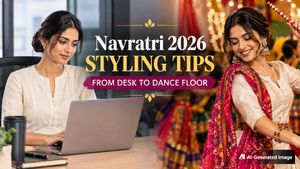 Office To Dandiya Nights: One Quick-Change Outfit Formula For Navratri 2026
 -
 As ‘Ranabaali’ Hits Theatres, A Look At Rashmika Mandanna’s ₹1.31 Lakh Ivory Saree For Pre-Release Promotions
 -
 Durga Puja Pandals Mumbai 2026: 7 Stunning Celebrations To Explore From Matunga To Juhu
 -
 World Spine Day 2026: Is Your Phone Habit Causing Neck Pain? What To Know About Tech Neck
 -
 Breast Cancer Awareness Month 2026: Expert Explains Why Family History Isn't the Only Risk


Age old Craft Of Faziilika


The craft of Fazilika is made in to an occupation by many women here, several of those who had earlier received training from the original Muslim migrants craftsmen of Utter Pradesh. These craftswomen have a loyal client list ranging from exporters to NRI's. The art had helped these women not only to earn a name for themselves but also allows them a steady income.
Though this embroidery work is quite a tedious one, it is majorly done on suites and salwaars. It has maintained its elegance and charm over the years and is the major attraction for visitors to the city. The art makes the women financially independent and allows them the creative freedom to sell the crafts at a reasonable price.
For Meenu Nagpal it is a hobby turned profession, as today she is the proud owner of Mehrab Boutique. At 40 years of age, she handles her business successfully from the last decade.
"The craze of embroidery among women is increasing because the designs that are available in markets are almost the same. But we make different designs. We use various embroidery techniques like Dabka work, needle thread work, Sipi work, Pearl work, Mirror work and Naqshi work and all this is not easily available in the market," said Meenu Nagpal of Mehrab Boutique in Fazilika. The embroidery on the salwaars are popular among women.
The craft is well known in Punjab, Haryana and Rajasthan, with the demand for the work growing by 20 percent per year. Most of the exporters, arriving here to book these artists with orders, often prefer keeping the identities of their chosen craftsmen, a secret for market competitiveness. These craftsmen supply to various fashion houses.
The craft is a demanding one, that often strains the eye but the craftsmen still continue to outdo each other. The charges are set as per pattern and materials used. The works are of wide variety like 'Tille ki Khadai', 'Moti-sippy work.'
"They use superior fabric and the designs are completely different from others. You don't get such designs anywhere else. They are very good both--the handwork and machine embroidery," said Meenu, one customer.
As the craft is a rage among Punjabi women, many Punjabi NRI women get their suits embroidered in Fazilika, thus giving many craftswomen permanent clients, keeping in mind their choices. "She makes the clothes according to customer''s choice. She creates her own designs and chooses the colour contrast by herself. If you buy readymade clothes, you have to compromise because you know there are limited designs available but here she knows how to satisfy her clients, and accordingly she makes these things," Rinky, another customer.
The work has undergone a certain degree of variations since the recent times, from sequin work that enhance the richness of the fabric, design and color.AGENCIES

 Continue with Google

