




 Click it and Unblock the Notifications


Latest Updates
-
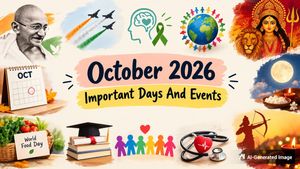 October 2026 Important Days And Events: Complete List Of National And International Observances
 -
 "I Look For Green Flags Now": Inside Dating's Biggest Shift In 2026
 -
 What Is Bhajan Clubbing? The Trend PM Modi Called Spectacular
 -
 Love & War First Looks: Alia Bhatt, Ranbir Kapoor and the Making of Bhansali's Next Epic
 -
 Bhadrapada Purnima 2026: What Makes This Full Moon Important Before Pitru Paksha
 -
 Pitru Paksha 2026: Do Ancestors Need Shraddha Rituals? Astrologer Ajit V Khawad Explains
 -
 Fake “Pakistan-Made” Beauty Creams Seized In Maharashtra: What To Know Before Buying Skin-Lightening Products
 -
 OTT Releases This Week (Sept 21-27): What To Watch Across Netflix, JioHotstar, Prime Video, ZEE5 And SonyLIV
 -
 CGM vs Finger-Prick Test: Which Blood Sugar Monitoring Method Is Better?
 -
 Anant Chaturdashi 2026: Why The Anant Sutra Has 14 Knots And How The Festival Is Linked To Ganesh Visarjan


Arctic And Its Species On The Brink Of Extinction


The research led by Eric Post, associate professor of biology at Penn State University studied the biological response of the Arctic warming and their research brought out some scintillating truth.
The scientists found that the increase in mean annual surface temperature in the Arctic over the last 150 years has had dramatic effects, which in the last 20 to 30 years has led to the decline in the sea ice coverage by a staggering 45,000 square kilometers per year.
While the global warming has also affected the snow cover of the region as it is said to be fast melting and breaking away every season. "Species on land and at sea are suffering adverse consequences of human behavior at latitudes thousands of miles away," said Post.
"It seems no matter where you look - on the ground, in the air, or in the water - we're seeing signs of rapid change," he added. The Arctic effect also threatens to bring various iconic species of the region to extinction. Ivory gull, pacific walrus, ringed seal, hooded seal, narwhal, and polar bear.
The researchers found that Polar bears and ringed seals, both of which give birth in lairs or caves under the snow, lose many newborn pups when the lairs collapse in unusually early spring rains.
These species may be headed for extinction.
AGENCIES

 Continue with Google

