




 Click it and Unblock the Notifications


Latest Updates
-
 World Hepatitis Day 2026: Date, Theme, History, Significance, And More
 -
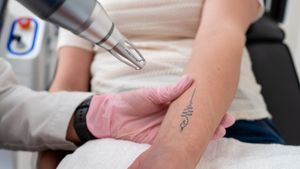 Tattoo Regret Is Rising: What Plastic Surgeons Want You to Know Before You Remove Your Ink
 -
 What Is E20 Janta Party: The Meme Movement Taking On India's Ethanol Fuel Policy
 -
 Indian Idol 16: Winner, Runner-Ups, Cash Prize, and Everything Else You Need to Know
 -
 CWG 2026: Mirabai Chanu Completes Hat-Trick Of Commonwealth Games Gold Medals
 -
 Jayaparvati Vrat 2026: All About The Five-Day Fast Dedicated To Goddess Parvati
 -
 August 2026 Festival Calendar: Complete List Of Hindu Fasts, Vrats And Auspicious Dates
 -
 Is Your Necklace Right For Your Neckline? Here's The Styling Secret To The Perfect Look
 -
 National Parents Day 2026: Parents Are Ageing—8 Subtle Signs They May Need More Support Than They Admit
 -
 Who Is Prahlad Joshi? Meet The New Education Minister Replacing Dharmendra Pradhan


Why Men’s Fertility Health Matters Just As Much As Women’s In IVF

As more working, independent women delay their pregnancies and choose to conceive in their later reproductive years, India declining Total Fertility Rate (1.9) becomes a cause of concern. Today, the average Indian woman is having less than two children in her lifetime - much below the replacement level of 2.1 - leading to more couples exploring artificial methods of conception via Assisted Reproductive Technologies like In Vitro Fertilisation (IVF), primarily considered a woman's-only domain.

This misconception about IVF that only a woman's fertility health determines how successfully the procedure turns out is far from the truth! In reality, a man's fertility health is equally responsible for the success or failure of an IVF cycle. We spoke to Dr Ajay Srivastava, Chief Embryologist, Crysta IVF, Delhi, who shared insights on role of men's and women's fertility in IVF.
50% of infertility cases involve a male factor
For centuries women have carried the cross of bearing perfectly healthy children. IVF too has long been framed as a woman's medical journey as she goes through hormone injections, scans, egg retrievals, embryo transfers, and the emotional highs and lows of treatment. The science says otherwise.
"Every embryo is 50% sperm and 50% egg and what that sperm brings to fertilisation determines whether the embryo thrives or fails. Despite this fact, the focus remains only on women, while male fertility receives far less attention than it deserves," said Dr Srivastava.
The sperm's 74-day regenerative cycle

The human male body produces new sperm on a continuous cycle of around 74 days. What this simply means is that the sperm a man produces in three months is substantially shaped by what he does or does not do today, in terms of his lifestyle, health and consumption.
"If a man eats a balanced diet rich in antioxidants, gets regular physical activity, maintains healthy weight, manages stress well, gets quality sleep, and avoids smoking or excessive alcohol consumption, his sperm quality will be far healthier than someone who doesn't. Other factors like prolonged exposure to heat from hot tubs, saunas, or laptops placed directly on the lap can also impact sperm health over time," shared Dr Srivastava.. The good news is that unlike egg quality, which declines with age in ways that are largely irreversible, sperm quality is highly responsive to intervention.
70% of male infertility cases remain undiagnosed
When an IVF cycle fails, the first finger is always pointed towards the woman, but the fact is that male fertility plays a crucial role not only in fertilisation but also in embryo development, implantation, and pregnancy outcomes. "The sad truth, however, is that most men don't even know they are the problem! In India, 70% of male infertility cases today remain undiagnosed through standard testing, highlighting the need for greater awareness and interventions and more comprehensive evaluation," warned Dr Srivastava.
Advanced molecular diagnostics bridging the gap

Male infertility treatment once relied on a single semen analysis. Today, thanks to advances in molecular diagnostics, it offers a range of options including AI-assisted assessment, precision surgery, and targeted therapy - bringing men closer to biological fatherhood while sharing the burden equally with their partners.
Microfluidics technology sorts sperm to lower the chances of miscarriage. ICSI (Intracytoplasmic Sperm Injection) lets the embryologist select a single sperm and inject it directly into the egg. AI sperm analysis removes human bias by flagging abnormalities that manual review misses. "Building on this, MACS (Magnetic-Activated Cell Sorting) filters out unhealthy sperm by selecting those that bind to a specific protein; PICSI identifies mature, high-quality sperm by mimicking how they naturally bond to an egg; and IMSI uses microscopy at up to 6,000x magnification to handpick sperm with the fewest physical defects. Together, these techniques are breaking centuries-old IVF stereotypes and giving hopeful parents better odds than ever before," explained Dr Srivastava.
Message From The Expert
Dr Srivastava concluded, "In primary school, we learn that two halves make a whole. In IVF, the same rule applies! A new life is created by two people, each contributing half of their biology. For a successful IVF outcome, both halves have to be healthy. Infertility is not a woman's problem alone, it is a couple's issue. When both partners are evaluated, informed, and involved from the beginning and share the responsibility, they make good decisions, access timely interventions, and improve their chances of success."
Disclaimer: The information provided in this article is for general informational and educational purposes only and is not intended as a substitute for professional medical advice, diagnosis, or treatment. Always seek the advice of your physician or a qualified healthcare provider with any questions you may have regarding a medical condition.

 Continue with Google