




 Click it and Unblock the Notifications


Latest Updates
-
 Dum Aloo Recipe: The Slow Cooked Flavor Secret Revealed
 -
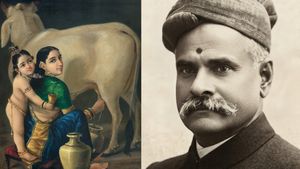 Raja Ravi Varma’s ‘Yashoda and Krishna’ Sells For ₹167 Crore, Breaking All Modern Indian Art Records
 -
 Anthony Anderson to Host Star Search Reboot: Bringing New Talent to the Spotlight
 -
 Dahi Vada – Soft And Fluffy Inside: Master The Perfect Balance Trick
 -
 Ranbir Kapoor's 'Ramayana' Teaser Drops On Hanuman Jayanti 2026, Netizens Compare With Prabhas 'Adipurush'
 -
 Throwback Thursday: Ajay Devgn Turns 57, A Look Back At The 'Drishyam' Star's Iconic 90s Hairstyle
 -
 Paneer Butter Masala Recipe: Restaurant Style Rich Gravy
 -
 World Autism Awareness Day 2026: Expert Points Out Early Signs Of Autism Before Age 3 Every Parent Must Know
 -
 Hanuman Jayanti 2026: Chant These Powerful Mantras And Follow Rituals To Reduce Fear And Mental Stress
 -
 Waking Up To Pee At Night? Your Body Might Be Trying To Tell You Something


Love Happens At Fourth Sight, Not First

Love at first sight is a myth -- and lovers need to meet at least four times before Cupid's arrow strikes their hearts, said a study.
The findings showed that people often find themselves drawn to individuals after multiple encounters, even when there was no initial attraction.
"Cupid's arrow is often slow to strike. It may be attributable to the gradual change in attractiveness from repetition," Ravi Thiruchselvam, Psychologist at Hamilton College in New York, was quoted as saying by dailystar.co.uk on Sunday.
For the study, the team gave snaps of people's faces to a group of young men and women.

The researchers then wired the participants brains to monitors as the group ranked the attractiveness of people in the pictures.
The subjects were then shown the snaps for a second time, and rated those they found attractive much more highly.
The attraction was even stronger on the third occasion and strongest of all on the fourth.
The fourth attempt showed extra activity around the excitement and pleasure centres of the brain of the participants.
Inputs From IANS


 Continue with Google