




 Click it and Unblock the Notifications


Latest Updates
-
 Samantha Ruth Prabhu Expecting Her First Child? Viral Video From Latest Appearance Fuels Buzz
 -
 We Asked AI What You Should Never Ask It. Here Is What It Said
 -
 Halwai Style Sweet Milk Cake Recipe: A Taste of Tradition
 -
 Akshar Yoga Kendraa Sets 21 Guinness World Records On International Yoga Day 2026
 -
 Acne Awareness Month: The Cheat Sheet for Salicylic Acid, Benzoyl Peroxide and Retinoids
 -
 Inside Anshula Kapoor’s Pre-Wedding Style: Kapoor Family’s Ethnic Fashion Moments
 -
 Forgetting Small Things Lately? Expert Explains Why It May Not Be More Than Ageing
 -
 Pankaj Tripathi's Brother Attacked With Axe in Bihar Village, Referred to Patna for Treatment
 -
 Street Style North Indian Matar Kulcha Recipe: A Flavorful Lunch
 -
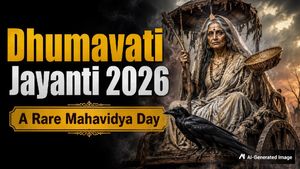 Dhumavati Jayanti 2026: Everything About This Rare Mahavidya Festival And Its Significance


Holika Dahan: Bonfire Rituals

Holi, the Indian festival of colours is coming closer every passing day. Tomorrow is Holika Dahan. It is an evening of bonfires. On this day, a bonfire is lit and then worshiped. Holika Dahan symbolises the win of good over evil.
Story behind Holika Dahan:
The Indian festival of colours, Holi has been mentioned in the Vedas and Puranas. Holika Dahan is considered as a victory of Prahlad and defeat of his aunt, Holika. The story behind Holika Dahan is, a demon King named Hiranyakashyap wanted everyone in his kingdom to worship him as God. But, his son Prahlad started following Lord Naarayana. So, King Hiranyakashyap ordered his sister, Holika to kill his son, Prahlad. Though Holika was blessed with a boon that no fire can burn her, the king asked her to sit in fire with Prahlad on her lap. When she sat with Prahlad in burning fire, the opposite happened. Holika got burned to death and Prahlad came out unhurt. That is why, Holi is famous to celebrate victory of virtue over evil.
The night of bonfire:

Because of the event, Holika is set up in grounds and then burned. A log of wood is arranged in a public place on Vasant Panchami (40 days before Holi). People throw dried leaves, twigs, branches of tree, cow dung and paper to create a sizable heap.
On the Holika Dahan, the effigy of Holika with child Prahlad on her lap is placed on the bonfire. In most of the places, the effigy of Holika is made with combustible material whereas Prahlad's effigy is made with non-combustible items. On Phalguna Purnima, the bonfire is burned and people rejoice by singing, dancing, applying gulal to each other and taking pheras of the Holika Dahan. In few cultures, cold Holika is worshiped (before the bonfire is lit) by the married women.
In various traditions, men carry sugarcane sticks with red gram leaves and burn them a little. Then the red grams are eaten as prashad. Even burning materials from the bonfire like cow dung balls are brought home and then papads are roasted on it.
At home, after the Holika Dahan, delicacies are served to the members and sweets are shared with everyone to celebrate the festival of colours. Next morning, Dhuleti or Holi is played with colours, gulal, abir etc.
This is how the evening of bonfires or Holika Dahan is celebrated.

 Continue with Google