




 Click it and Unblock the Notifications


Latest Updates
-
 World Sickle Day 2026: Significance, Theme And What It Reveals About Healthcare Access Gaps
 -
 Iced Tea Recipe: Your Refreshing Summer Drink
 -
 Horoscope for Today June 19, 2026 - Small Steps Lead to Steady Progress
 -
 Dalma Recipe: An Odisha Traditional Dish Delight
 -
 Bhumi Pednekar’s Button Down Banarasi Jacket Breaks Every Rule Of Traditional Fashion
 -
 Ancient Beauty Traditions: Natural Skincare and Hair Rituals From Around the World
 -
 Kolkata Street Special Ghugni Recipe: Your Ultimate Snack
 -
 Who Is Suhasini Mulay? Aamir Khan’s Mother In ‘Lagaan’ Who Found Love At 60 And Married Within 75 Days
 -
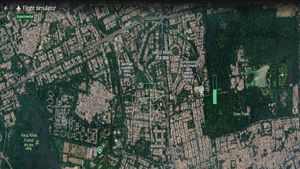 You Can Now Fly Over Any City in the World From Your Browser, Thanks to Google Earth
 -
 Throwback Thursday: Meet The Superstar Who Sang Her Own Songs And Outearned Many Male Stars


The Virtual Chinese City


The federally-funded 'Second China Project', as the researchers named it, was undertaken with objective of educating and preparing foreign service or other government professionals so that they would be fully prepared and ready to work when they visit China.
"I think what we hope is that this kind of environment can provide a bridge between knowledge alone and actually being in the real-life environment," said Julie Henderson, an international program specialist at the UF College of Pharmacy and co-principal investigator and project designer for the effort.
The new model can not only introduce users to typical sights and the Chinese language, but also to expectations of politeness, accepted business practices and cultural norms. "We've built an environment around learning objectives," said Paul Fishwick, lead investigator and a professor of computer and information science and engineering.
In the office simulation, the user's avatar chooses appropriate business attire and a gift, greets a receptionist, and is guided to a conference room to be seated, among other activities.
The system improves the user's understanding or awareness with each scenario: the Chinese formal greeting language and procedure, that it's traditional to bring a gift to a first meeting, that guests typically are seated facing the door in a Chinese meeting room, and so on.
In the simulation, a greeter shows the visitor photos of well-known personalities who have visited as patrons, a typical practice in many establishments in China. There is also a Web tutorial that provides biographical background on Chinese President Hu Jintao and other well-known Chinese personalities in the photos.
"It's important to be able to go to China already familiar with the important historic and political figures," said Henderson. The researchers believe that allowing users to place themselves within Second China's virtual world may make the information more memorable and pique users' curiosity and urge to explore.
They'll spend a year developing the project, and the next year testing it on users to gauge its effectiveness."In terms of knowledge and empathy toward the culture, we don't yet know the answer to the question of where one medium succeeds and another one fails," Fishwick said.

 Continue with Google